
BEYOND A PASSPORT HOLDER
*** SAMPLE MODEL BLOG POST CONCERNING IDENTITIES
BEYOND A PASSPORT HOLDER
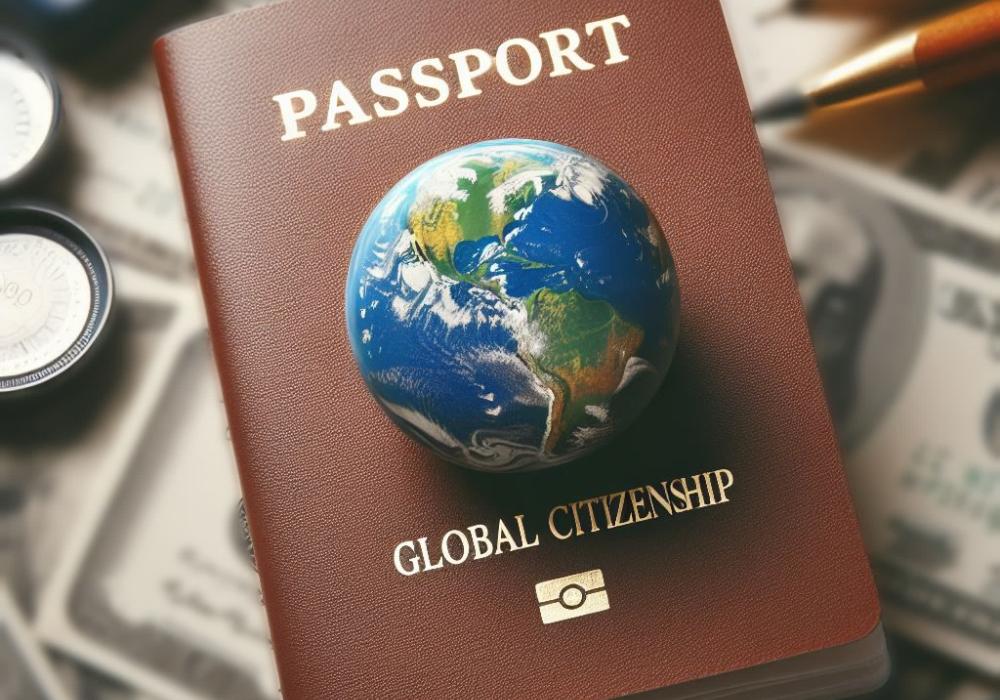
Aneta Budka | October 25, 2024
Have you ever felt at home in a place you had never been to before? A few years ago, I found myself in a small, bustling café in Vienna, chatting with a waiter, and even though we didn’t share the same native language, English became our bridge—a global language that allowed us to connect without barriers. Not only was I welcomed warmly, but I also began to realize how powerful a common language can be, opening doors to understanding and friendships that transcend any border. Thanks to this seemingly ordinary experience, I got immersed in thought regarding issues like:
- What does it truly mean to belong somewhere in a world that's so interconnected?
- Are we defined by the borders on our passports or something far more fluid and expansive?
- What does being a "citizen of the world" mean, and how does it shape who we are?
Identity in motion: Who are we in a globalized world?
As global citizens, our identities are no longer confined to the traditional labels of nationality or ethnicity. Like Roger Abrantes, who identifies as a "citizen of the world," [visit his blog --> https://rogerabrantes.wordpress.com/2013/03/11/im-a-citizen-of-the-world/], I am convinced that the essence of our identity is shaped by the multitude of experiences we gather from around the globe. When we cross borders, engage with diverse cultures, and embrace different ways of life, we expand our understanding of who we are. Abrantes, in his blog, reflects on this notion beautifully. He describes sharing meals with the Masai in Africa and the Chhetris in Nepal, feeling a kinship with people regardless of where they come from. His attitude made me realise that being a citizen of the world brings with it a deep sense of belonging—not to a specific nation, but to humanity.
What do you think? Have you ever felt like you belong more to the world than to just one country?
Challenging traditional views of identity
Being a global citizen also challenges traditional ideas of identity. For centuries, our sense of self has been tied to the country or culture we were born into. But as Albert Einstein once said, “Nationalism is an infantile disease.” In today’s interconnected world, we are no longer defined by the limits of our birthplace. Instead, we have the opportunity to forge identities based on shared values, goals, and global experiences.
Take Thomas Paine’s view that “the world is my country, all mankind are my brethren.” His words are echoed today in movements advocating for climate action, human rights, and social justice across borders. As global citizens, we have the responsibility to see beyond the artificial lines that separate us. When we identify as global citizens, we embrace a broader understanding of identity that includes a commitment to the well-being of people everywhere.
But is this mindset too idealistic? Can we truly let go of national identity, or do we simply add new layers to it?
Redefining yourself
The reflection over the freedom and open-mindedness that stand behind cosmopolitanism has undoubtedly shaped who I am today. It has influenced the way I see the world, my values, and my sense of purpose. In the same way that Roger Abrantes feels at home wherever he travels, I’ve found that the more I get familiarised with other cultures, the more I understand myself. Little do we realize that with each new encounter and perspective, another layer is added to our identity.
Whether it’s learning a new language, as Abrantes has done with his impressive nine languages, or adapting to different ways of thinking, global citizens constantly evolve. This adaptability is perhaps one of the most powerful aspects of global citizenship. It allows us to break free from the rigid confines of a single cultural perspective and see the world—and ourselves—in a much richer, more complex way.
Do you think your identity has been shaped by places and people beyond your own country? How has travel or exposure to other cultures impacted you?
Final thoughts on a global identity
In a world where borders seem to blur with every new technology or flight, it’s worth asking: Who are we, really? Are we citizens of specific countries, or are we part of something larger? By embracing global citizenship, we can broaden our identities, connect with people across cultures, and shape a future where unity matters more than division.
Your global journey awaits
I invite you to think about your own experiences. Have you ever felt like a citizen of the world? Share your stories in the comments below and let’s start a conversation about what it means to belong in today’s interconnected world.
Subscribe to this blog for more discussions on identity and global citizenship, or check out related blogs such as “Why we should travel with purpose” [https://www.matter.ngo/travel-with-purpose/] and “How language shapes our perception of the world [https://www.argosmultilingual.com/blog/how-language-shapes-our-perception].”
Let’s continue exploring this journey together!
Note: For further reading on global citizenship and its impact on identity, you might enjoy:
- https://www.globalcitizen.org/en/
- https://www.youtube.com/watch?v=ODLg_00f9BE
- https://www.worldpackers.com/articles/travel-with-a-purpose
Why don’t you also consider the journey of Pico Iyer, a writer who describes himself as “a global soul” in his book The Open Road?
https://www.nytimes.com/2008/04/06/books/review/Morris-t.html


This blog offers a thoughtful reflection on what it means to belong in a world that grows more interconnected every day. The anecdote about the Vienna café beautifully illustrates how a simple human connection can transcend borders, showing us the power of shared language and mutual understanding. It’s fascinating to consider how these small moments can shape our sense of self and open our eyes to a broader, global identity.The idea of being a "citizen of the world" is both inspiring and challenging. As you mention, it pushes us to rethink traditional notions of identity rooted in nationality or culture. Instead, we’re encouraged to embrace an identity shaped by shared experiences, global values, and an appreciation for diversity. The references to Roger Abrantes’ global mindset and Thomas Paine’s vision of universal kinship highlight how timeless and universal this idea truly is.The reflection on cosmopolitanism also raises an important question about responsibility. Being a global citizen comes with a duty to care for the well-being of people beyond our immediate communities—something that movements for climate action and human rights exemplify.Thank you for encouraging such meaningful reflection and providing additional resources for deeper exploration.
OdpowiedzUsuńThis is an exceptionally insightful blog! You are right, our identities are no longer limited by our nationality. Global experiences broaden our understanding of ourselves and others. We can connect with people across cultures and work on global issues. I had a situation similar to yours in Vienna. Four months ago I went on a short excursion to Copenhagen, the capital city of Denmark, I was positively surprised when citizens started chatting with me - in English of course. I heard some amazing and hilarious stories from them. It was a great experience! By the way, extra resources you have provided really enabled me to dive deep into the topic.
OdpowiedzUsuńWhat a beautifully written and thought-provoking post! Your story about visiting a cafe in Vienna is a great example of how our nationality and the language we speak are not an obstacle to communication. I agree wholeheartedly with your reflections on identity in our world. I have always felt such a strong connection to my country of origin, but traveling has helped me to explore myself and broaden my horizons. Moreover, it has influenced my identity and reshaped the way I see the world these days. I feel like people from abroad have influenced me too, especially because I have made many friends while traveling to different countries.
OdpowiedzUsuńAnswering your question, I do feel like we can't let go of our nationality, but we add new layers instead to it. For me, it's like putting together puzzles.
Your post inspired me to think about my own journey and reminded me that identity is elastic – it evolves every day with every experience. I am looking forward to reading more posts about identity and its connection to nationality.